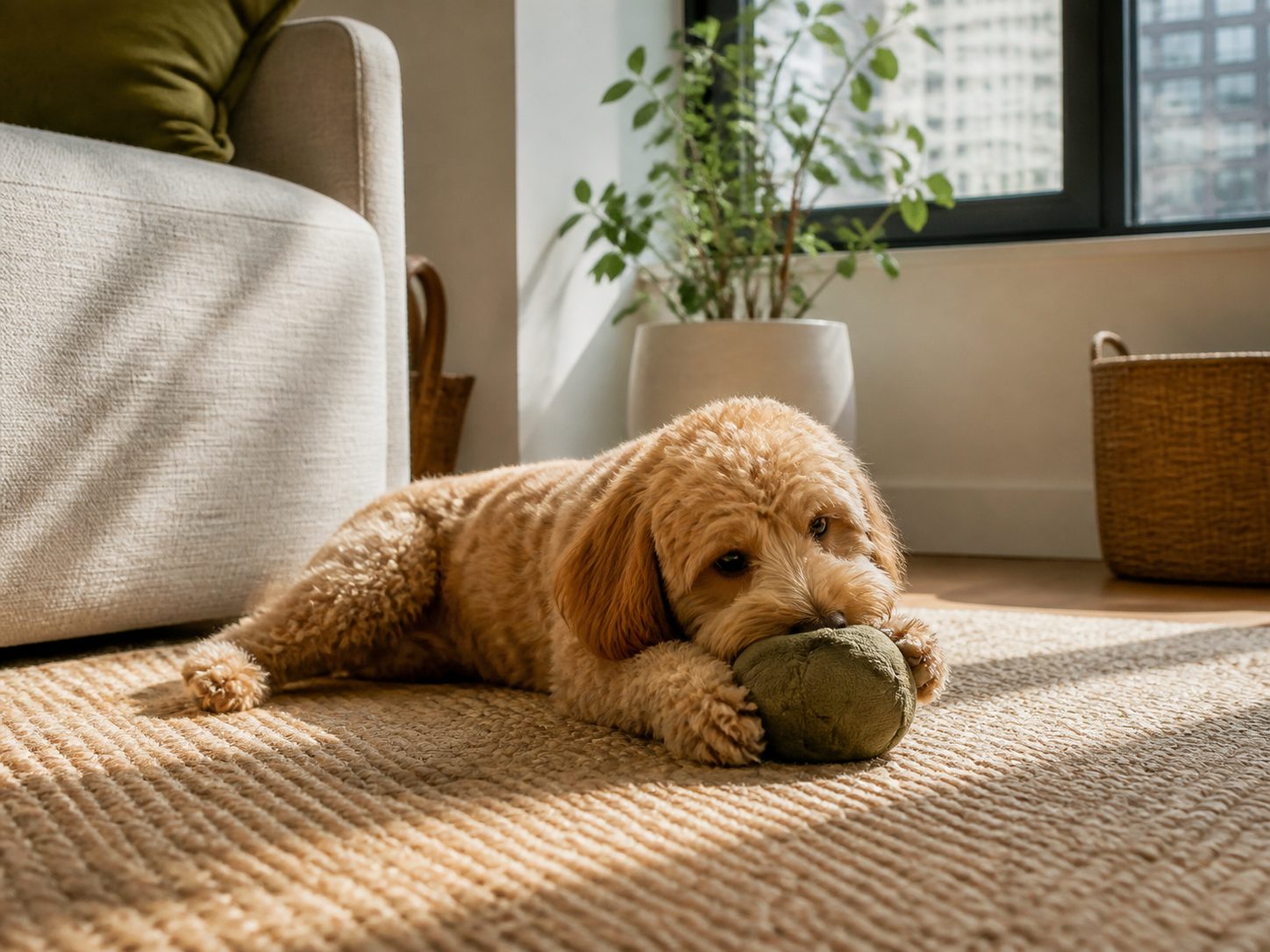
Apartment-friendly enrichment is less about finding a product labeled “quiet” and more about choosing activities that stay on the floor, absorb impact, and encourage sniffing, licking, or careful problem-solving instead of repeated throwing.
Start with the activity, not the toy
For steady, focused engagement
Food puzzles, lick mats, and appropriately sized rubber food toys can turn part of a normal meal into a longer activity. Place them on a nonslip rug or mat so they do not migrate across hard flooring.
For dogs that live through their noses
Snuffle mats, towel folds, and simple supervised scent searches are naturally quiet. Rotating a few activities every several days can make familiar objects feel interesting again.
For gentle carriers and cuddlers
A well-made plush toy may suit a dog that carries rather than destroys toys. Seams, stuffing, squeakers, and loose pieces must be checked regularly.
A five-point apartment check
- Correct size: it should not fit completely inside your dog’s mouth.
- Safe material: avoid loose ribbons, removable eyes, and hard items that could damage teeth.
- Low impact: test how it sounds when dropped on your actual floor.
- Easy cleaning: choose washable surfaces for toys used with food.
- Retirement plan: discard anything frayed, split, or shedding pieces.
Our practical starting set
Begin with one washable snuffle activity, one correctly sized food toy, and one soft item matched to your dog’s play style. That is enough variety to learn what genuinely works before buying more.
If your dog guards food or toys, destroys objects rapidly, or has dietary restrictions, ask your veterinarian for individualized advice.
Sources and review notes
This guide summarizes safety and enrichment guidance from the American Animal Hospital Association, VCA Animal Hospitals, and ASPCA. It is educational and is not veterinary advice.