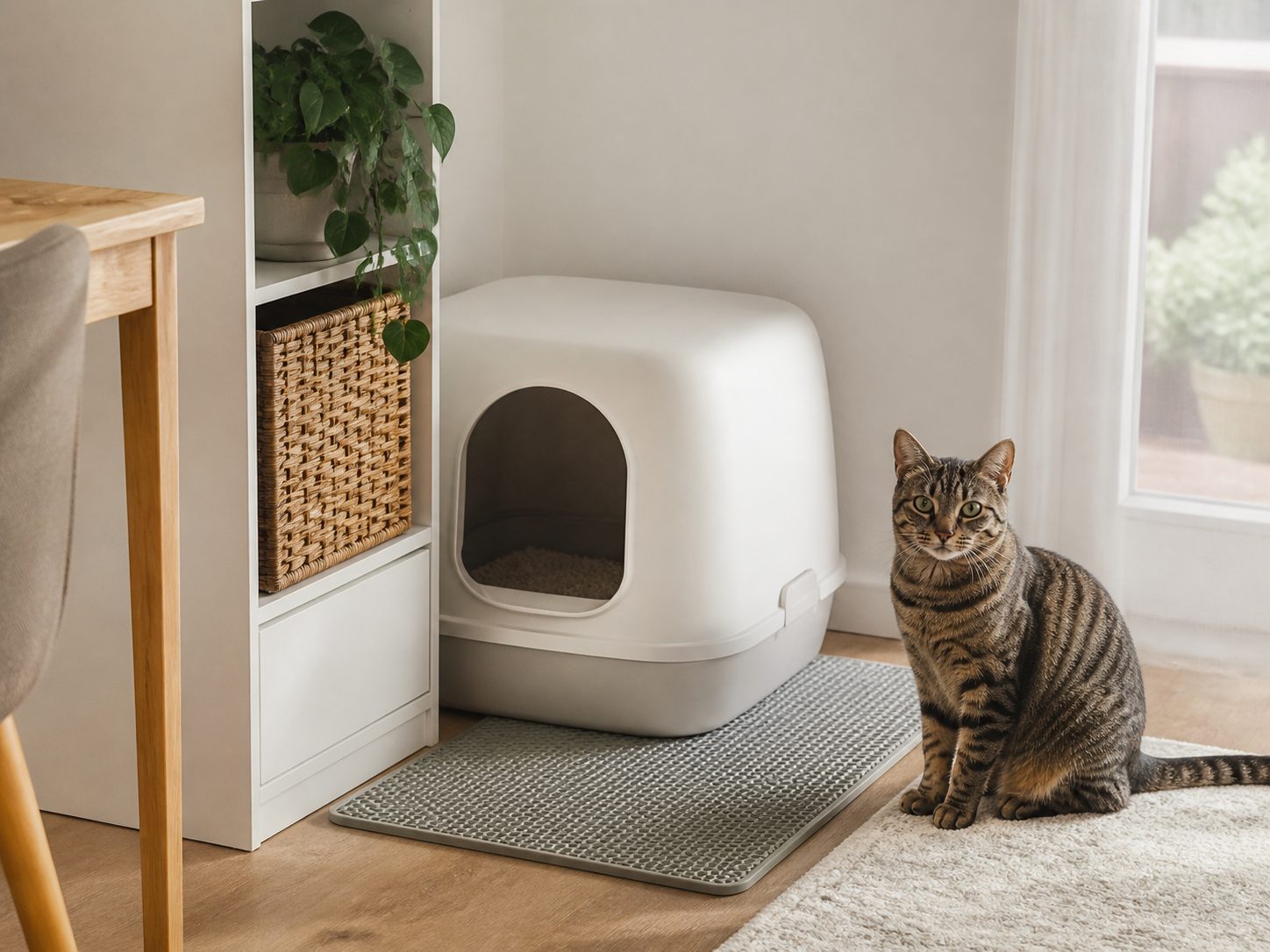
The best litter box is one your cat can enter comfortably, reach without stress, and use in a quiet location. A beautiful enclosure that feels cramped, traps odor, or creates an ambush point is not truly space-saving if your cat avoids it.
Measure for the cat first
VCA notes that cats often prefer a box about one and a half times their body length. Older cats or cats with reduced mobility may need a lower entry. Covered and automatic boxes work for some cats and frighten or inconvenience others, so preference matters.
Choose a calm, accessible location
Avoid noisy laundry machines, blocked routes, and tight dead ends. Keep the toileting area separate from food and water. In multi-cat homes, boxes spread across different locations can reduce competition better than several boxes crowded together.
Control odor with routine, not perfume
- Scoop at least daily.
- Wash with mild soap rather than strong-smelling chemicals.
- Top up or replace litter according to the litter type and your cat’s preference.
- Use a generous tracking mat that can be vacuumed or rinsed.
- Keep a lidded waste container nearby if that helps you scoop consistently.
Before buying an enclosure
Confirm that the opening, internal turning room, ventilation, and cleaning access all work for your cat. Introduce a new configuration gradually and keep the previous acceptable box available while you observe.
If your cat begins eliminating outside the box, strains, vocalizes, produces little urine, or changes habits suddenly, contact a veterinarian promptly.
Sources and review notes
This guide draws from VCA’s house-soiling guidance and its feline environmental-needs summary. It is educational and is not veterinary advice.