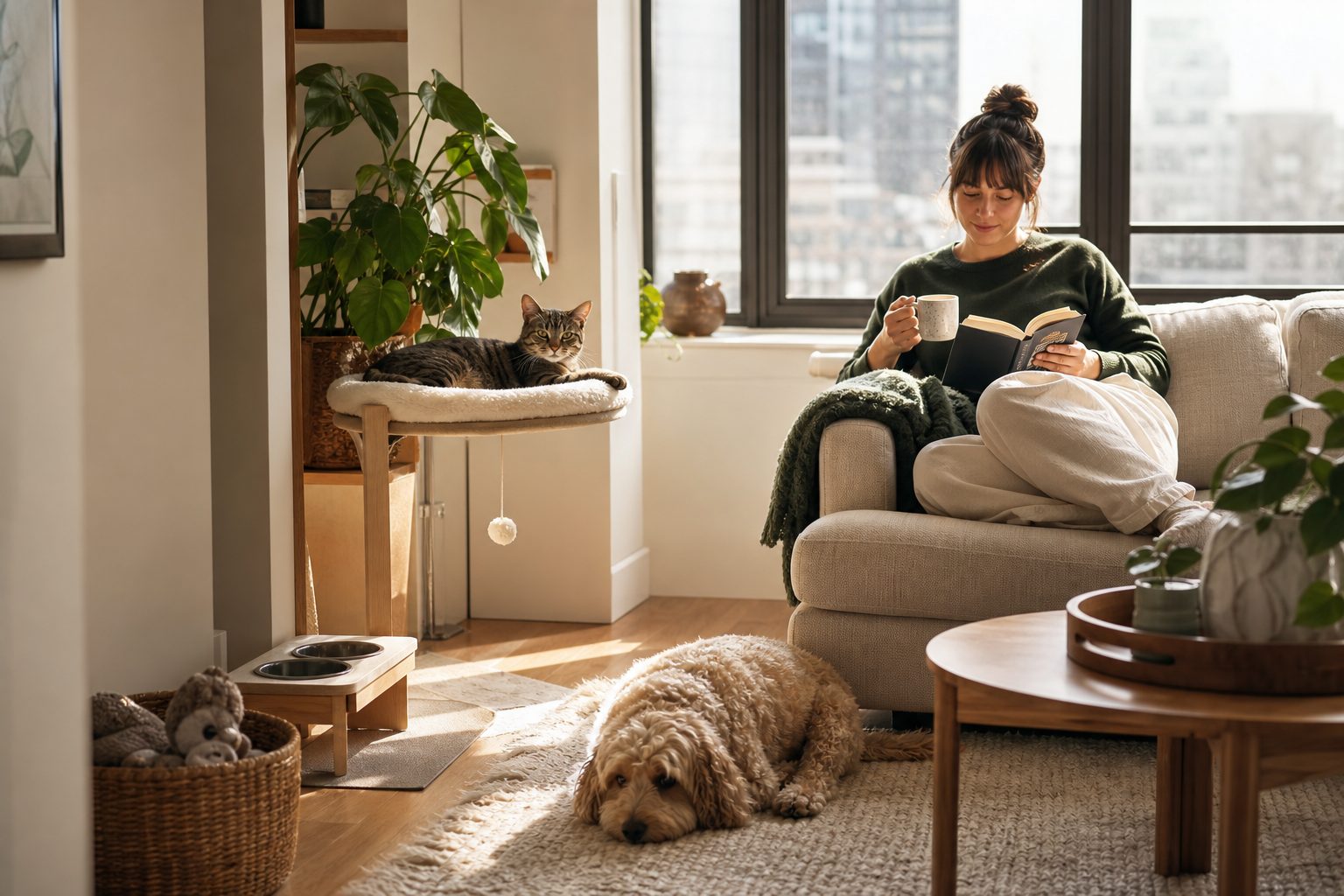
Small homes make complete separation difficult, but a pet can still have a reliable place to decompress. The goal is not decorative perfection. It is a location your pet can enter and leave freely without being followed or cornered.
Choose the lowest-traffic useful spot
Look beyond the center of the living room. A quiet bedroom corner, the sheltered side of a sofa, or a stable elevated perch may work. Cats often value height; dogs may prefer a covered or partially screened resting place.
Build in choice
Offer more than one resting option when possible, especially in a multi-pet household. Keep food, water, toileting, scratching, play, and sleeping resources separated enough that one animal cannot control access to everything.
Make the routine predictable
- Keep bedding and familiar scents consistent.
- Use regular meal, walk, and play times where practical.
- Rotate enrichment without changing the entire space at once.
- Teach household members to leave the pet undisturbed there.
- Reduce sudden sound near the retreat.
Watch what your pet tells you
A retreat is working when the pet chooses it voluntarily and can settle. Hiding constantly, appetite changes, overgrooming, destructive escape attempts, house-soiling, or escalating aggression deserve professional attention rather than more décor.
Sources and review notes
This guide summarizes feline environmental-needs guidance, VCA’s anxiety guidance, and AAHA’s enrichment overview. It is educational and is not veterinary advice.